Fontiers and Civilization -
An American Example
By Robert Bedeski, Ph.D.
Professor Emeritus, University of Victoria, Canada
Program Chair, Comparative Civilizations Forum (CCF),* 2025, 2026 Conferences
Board Member, CCF
Overview
Think of Civilization as a process, rather than as a stable condition, that is undertaken for the
improvement of human life. “Civilizing” is normal progress and the desired default setting in
society. It does not obtain with passivity or insouciance, and needs constant care and feeding
with labor, thought, and action. Failure results in slippage and loss of needful things slowly and
painfully built and accumulated by those who came before us.
On a personal level, my longtime intellectual quest focused on understanding the State,
especially past and present iterations in East Asia. Over the past few years, with membership
and participation in the CCF, I came to realize that the concept of Civilization was of equal
importance. I see myself like Monsieur Jourdain in Moliere’s 1670 play, “The Bourgeois
Gentleman,” who realized “These forty years now I’ve been speaking in prose without knowing
it!” I have been studying Civilization without realizing it. With this epiphany, I began retracing
my steps to discover things and thoughts I missed. This first essay is the first step in fulfilling that
project. I selected the topic of frontiers as the result of a recent outing and discovery. In future
essays, I will explore other themes which I consider intrinsic to Civilization, and offer a few travel
photos as illustration.
Civilizations and their Frontiers
If you think of civilization as a process, not an accomplishment, the fluidity of human events makes more sense. It never stands still and is in constant need of refreshment, like a stubborn child. If a population ignores the values, morals, and institutions that gave Civilization its cohesion, unraveling
is likely. Like throwing a ball into the air, a Civilization is either ascending or descending – except for the motionless instant at its apogee. The initial thrust is all the ball needs, but a Civilization improves or declines depending upon those whose lives and labors are contained. The ball is defined by its shape and materials. Civilization has amorphous boundaries which are fluid and unpredictable, and defined by the energy and commitment of its constituents, who respond to their environment with pragmatic cunning. More energy, fuller commitment, and more constituents add up to longer "flight,” subject to the outer environment and other "balls" which may collide.
The subject here is the frontiers of a civilization. Unlike borders or boundaries which are linear and demarcated, a frontier has no markers to indicate inner and outer. It is generally a zone of transition between one civilization and another, or Civilization and non-Civilization. China’s self- identification as “Central Kingdom” (zhongguo) meant that adjoining kingdoms like Korea were less civilized, or tribes like the Xiongnu were uncivilized. China’s frontiers were considered zones of the “Not-yet-fully-civilized” but would eventually be embraced with education and enlightenment.
A frontier is generally a contiguous strip of land between a Civilization and an adjoining civilization or a kind of no-man’s land. It is less secure than a heartland and may see clashes with non-civilized occupants. Frederick Jackson Turner offered his thesis on America’s frontier and wrote that its existence had established a distinctive American style of liberty. Also, by the end of the nineteenth century, that frontier had practically vanished with the settlement of the interior and establishment of west coast cities.
The American Frontier
The American frontier was fluid. At the end of the revolution, the Alleghany Mountains formed a zone between the original thirteen colonies and Indian lands. The Northwest Ordinance of 1787 incorporated territory around the Great Lakes and opened the land to settlement, thereby moving the frontier further west. In 1803, the Louisiana Purchase added 828,000 square miles to the US, which were to comprise fifteen new states. The Mexican-American War added California and other southwestern territory to the U.S.
In each case, the new territory became a frontier attracting settlers and immigrants. Wagon trains moving westward carried pieces of Euro-American Civilization to be transplanted in their new homes and towns, with hope to replicate the culture they left behind.
Soon after the Gold Rush of California, numerous settlers pulled up stakes and embarked on the treacherous journey. One route passed through Arizona and through Apache country, where raiding parties harassed and robbed the emigrants. Fort Bowie was established (1862) by the California
Volunteers to provide protection to the emigrants. A violent battle between the Volunteers and Chiricahua Apaches took place at Apache Pass over access to a mountain spring. An earlier engagement occurred the year before over Apache kidnapping of a settler. Sporadic fighting between the army and Apaches occurred over the next few years.
The taming of the frontier has been the subject of novels, films, and tall tales which have become part of American identity. In the context of comparative civilization, the replacement of wild frontier with towns, cities, states, farms, railways, roads and electrification, under layers of law and
incorporation into the national and international economies, was a historical transformation of the American nation from a European outpost to a distinctive civilization. In this evolution, the frontier was fluid and the leading edge of large-scale migration – not a static division as represented by Hadrian’s Wall in Britain or the Great Wall of China.
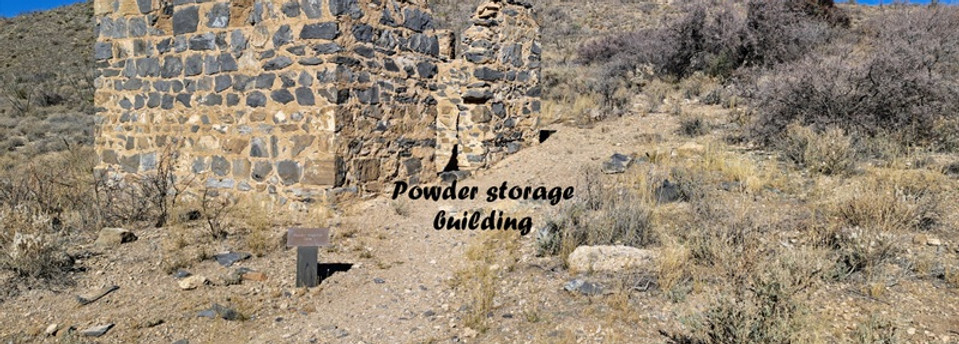
Today, Fort Bowie is a National Monument in the Arizona wilderness, with ruins and a ranger station for visitors. The posted signs provide the tourist with explanations of the fort’s functions and history. From the Overlook Trail, one gets a panoramic view of the old fort and the dry creek bed that served as the wagon road for the migrants. A lone howitzer of the type used in battling the Apaches stands outside the Ranger station. A storage house for powder, cavalry barracks, and officers’ quarters remind visitors of the military nature of the frontier during the last decades of the nineteenth century.


